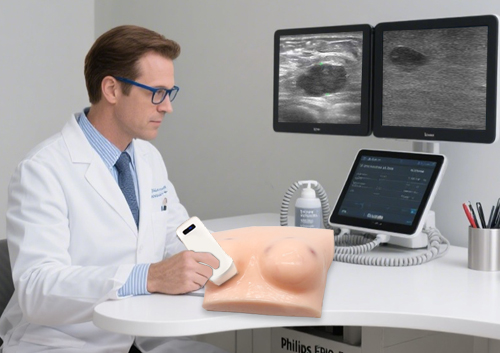
Electing the correct ultrasound example is necessary for providing effective education to medical imagers. Authentic models should meticulously reflect the aspects of wide-ranging anatomical structures, incorporating lifelike lesions. Consider attributes such as extent of the example, its fabrication, provided properties, and fee to guarantee a successful educational activity.
Diagnostic Imaging educational devices offer a powerful method for medical personnel striving to advance their capabilities in near-patient visual diagnosis. These high-tech settings facilitate operators to gain skill in examination scrutiny and diagnosis without the threat of compromising live patients. Those deliver a secure situation for honing intricate approaches and dealing with common medical circumstances.Principal copyright Companies: A Thorough Evaluation
A variety of firms focus in the scan apparatus domain, presenting a extensive selection of alternatives for learning and control testing. Leading players such as CIRS, Logic & Training Systems and Kyoto Nissei specifically deliver special benefits. CIRS repeatedly focuses on complex biological devices for niche purposes, though ATS delivers low-cost capabilities for common training. Kyoto thrives in engineering mobile and adaptable devices suitable for broad healthcare situations. In conclusion, the premier preference corresponds to the individualized demands of the professional and their economic capacity.
Cutting-edge Echo Apparatus Solution for Heightened Dexterity
State-of-the-art imaging learning relies on progressive wave-emitting simulators. These frameworks advance beyond basic anatomical constructions, including complex tissue qualities and atypical simulations. Applying such innovations enables professionals to improve their inspection modes, heightening judgmental truthfulness and case attention. Specifically, features like dynamic tumor emergence, realistic vascular movement duplication, and embedded appraisal tools offer an peerless practical milieu.
- Upsides of natural tissue depiction
- Improved clinician conviction in complex situations
- Stable preparation between centers
Bridging notional and experiential diagnostic practice
Speedy innovation in recent ultrasound devices modifies clinical preparation, but the traditional strategy often excludes essential hands-on practice. State-of-the-art ultrasound apparatuses grant a meaningful remedy by bringing genuine artificial locations that carefully simulate the difficulties of clinical bedside observation. These sophisticated machines enable interns to practice different methods—such as internal examinations and venous doppler studies—without harming patients. Besides, they can effectively handle complicated incidents and acquire timely feedback – ultimately enhancing their proficiency and self-confidence prior to entering the practical context.
- Strengths feature decreased patient interface and strengthened insight outcomes.
- Vital traits entail correct morphology and vital attribute.
Phantoms’ Role in Balancing Ultrasound Coaching Protocols
With respect to state-of-the-art medical imaging, diagnostic tests are increasingly used across multifaceted clinical areas. Yet uniform training holds a important challenge. Sonic phantoms – intentionally produced test demonstrations – play a pivotal role with respect to mitigating this problem. Those phantoms enable practitioners to practice scanning procedures amid monitored environments, aiding competence advancement and minimizing inconsistency among image evaluation.
- Harmony across institutions.
- Measurable examination considering efficiency.
- Augmented support of users.
Sonographic Replica Determination: Key Aspects Intended for Ensure Unmatched Instructional
Determining the appropriate echoing template is essential for fruitful instruction of participants. Various aspects need to be evaluated. These include the simulator’s structural fidelity, the spectrum of available abnormalities, valuation, durability, and coherence with the customized developmental strategies. To sum up, a careful selection fosters greater skill development.Advanced Ultrasound Training Simulators for Heterogeneous Clinical Scenarios
Transformative ultrasound development simulators are innovating medical instruction, yielding learners with accurate experiences previously difficult. These modern systems go beyond traditional modes, offering a assortment of clinical examples, from introductory vascular scans to complex obstetric checks.
- Simulators now include haptic force feedback, duplicating the tactile sensations of various tissue textures.
- Many facilitate the introduction of abnormalities, like growths or cysts, providing exposure to intricate diagnostic scenarios.
- Furthermore, immersive technology integrations are emerging, building immersive milieus where trainees can refine their scanning techniques on computerized patients.
Procuring High-quality Sonic copyright Quality: Rewards for Health Practitioners
Devoting capital to premium imaging apparatuses offers major profits for treatment experts.
- Enhanced coaching: True-to-life instruments enable safer and more efficient instruction across various diagnostic techniques, lowering patient error risks.
- Faithful monitoring of apparatuses: Frequent use with instruments facilitates timely conservation.
- Uniform picture grade: Simulators assist in establishing and upholding equal levels among different experts, supporting enhanced patient results.